


In the exhilarating universe of sports betting, few aspects act as the true cornerstone of the experience quite like the odds. They are not simply numbers displayed on a screen; they are the sport’s private code, a numerical heartbeat that converts a casual fan into a calculated punter. For many bettors exploring the sleek interface of a platform like Incaspin Casino, the sight of a slash placed between two numbers instantly marks a connection to a venerable, historical tradition. Fractional odds, often overlooked by newcomers as archaic mathematics from a dusty textbook, actually hold the key to an instinctive and immensely rewarding betting journey. They possess a robust charm that goes beyond geographical boundaries, offering a direct, no-nonsense link between the stake and the potential profit. Understanding this format is not a matter of conquering complex algebra; it is about discovering a story of risk, reward, and the absolute, unbridled thrill of anticipating the unpredictable. Once the logic falls into place, a bettor’s confidence rises, and the entire strategy moves from guesswork to a refined art of value perception backed by a system that has stood the test of centuries.
The Historic Pedigree of the Slash
To really understand the elegance of fractional odds, one must begin with a voyage back to the dusty tracks of royal enclosures and the boisterous early days of the turf. These odds are frequently colloquially, and quite appropriately, dubbed “British odds” or “traditional odds,” a naming convention that perfectly captures their lineage. Long before the glow of digital pixels illuminated the sportsbook at Incaspin Casino, bookmakers at horse racing circuits needed a swift, universally understood shorthand to balance their ledgers and communicate value to shouting crowds. The fractional system emerged as the undisputed champion of this arena. It was not conceived in a sterile laboratory of mathematicians but organically, on the grass, where a trader might offer 5/1 against a longshot stallion galloping in the mud. This heritage is specifically why the format clings so tightly to the sport of kings today, resisting the sterile pull of decimalization. The fraction tells a story of an implied struggle; the denominator represents the investment unit, while the numerator represents the potential return for every one of those units risked. It is a peer-to-peer contract simplified into its most primal form, a symbol that connects the modern digital bettor directly to the days of top hats, binoculars, and the thunder of hooves.
Harnessing Fractions in Real-Time Betting Markets
The volatile beauty of live betting is where the static nature of pre-match odds fades and fractional pricing turns into a swiftly beating strobe light of information. On a platform as vibrant as Incaspin Casino, watching fractional odds fluctuate in-play is akin to taking the pulse of the match itself. The pace and pattern of the moving slash deliver more insight than the scoreboard. A football underdog might commence the day at a detached 8/1, but if they survive the first half without conceding, that fraction doesn’t just maintain its dignity; it drops dramatically, perhaps plunging down to 5/2 or even lower. The denominator, which once signified a massive underdog story, contracts rapidly, showing a live swing in momentum that the casual television viewer might miss. Skilled in-play traders using fractions often detect the “steam” quicker than those using decimal alternatives because the visual gap between 4/1 and 5/2 is more psychologically stark than a drop from 5.00 to 3.50. It triggers an immediate emotional response regarding the evaporating value. In tennis, a 1/4 favorite might shift to 1/2 after dropping serve, a massive margin contraction that warns of an impending upset. Reacting to these shifting slashes, rather than counting solely on updated live streams, allows a bettor to lock in value seconds before the market fully corrects, converting the traditional format into a modern weapon.
Reading the Implied Probability behind a Slash
A really sophisticated bettor never glances at a betting slip without asking a key critical question: “What precisely does the market really believe?” Fractional odds provide a direct gateway to this hidden layer of market sentiment through the calculation of implied probability. While the bottom line is invariably profit, the percentage chance hiding beneath the surface of a price like 4/1 is what determines whether a wager holds genuine value or is just a donation to the house. Converting these fractions into percentages demands a simple two-step dance. The bettor adds the two numbers together to find the total parts of the equation and then splits the stake (denominator) by that total, multiplying by 100 to reach a percentage. For an odds-against price of 3/1, the math unfolds as follows: the stake (1) is divided by the sum of the stake and profit (3+1=4), revealing a 25% chance. When a bettor at Incaspin Casino believes a striker has a 40% chance of scoring based on the latest match previews, yet the 3/1 price implies only a 25% likelihood, a massive value gap has been located. This is the intellectual heartbeat of profitable sports betting. Fractions do more than govern payouts; they paint a vivid picture of the crowd’s doubts and beliefs, giving the sharp observer a clear roadmap to exploit market inefficiencies in real time.
Fractional Betting Versus the Decimal Takeover
The contemporary bettor often finds themselves caught in a clash between heritage and technological convenience, a clash most evident in the fractional vs. decimal odds argument. A decimal number, such as 3.00 or 1.50, packages the full return—stake included—into one tidy, surgical number suited for computations and rapid calculations regarding final return. Yet, fractional odds have a mechanical grit that decimal numbers systematically remove. When a gambler sees 2/1 at Incaspin Casino, the mind immediately imagines doubling the stake as pure cream on top. The division of “stake” and “profit” in the fraction reflects the genuine wagering procedure, where the danger never blurs with the gain. This psychological distinction is a strong asset for money management. Furthermore, particular specialized markets and standard match analyses still default to fractional formats because the intervals—like 100/30—are firmly embedded in the common awareness of specific sports trading floors. While decimal systems earn praise for straightforwardness, fractions gain loyalty for character and analytical richness. They resist the complacent approach of just adding up final winnings and instead compel a gambler to concentrate intensely on the profit rate, a habit that sharpens long-term decision-making and separates amateur punters from committed experts of the game.
The Defining Traits of “Odds On” and “Evens”
No detailed analysis into the fractional universe would be complete without dwelling in the unusual territory found between absolute risk and the protection of red-hot favoritism. This territory is controlled by “Evens” and the bizarre world of “Odds On” fractions. “Evens” is the great equalizer, the universal symbol of a coin flip, always written as 1/1. It is the purest form of wagering, a duel where the bookmaker detects no difference between the two opposing sides. At Incaspin Casino, discovering an “Evens” shot is like uncovering a perfectly calibrated balance; risk one unit to win one unit. The psychological comfort of doubling your money without complicated fractions is what makes this price point eternally popular in unpredictable markets. However, the situation shifts rigidly when transitioning into odds-on territory, where the denominator outweighs the numerator. Prices like 1/5, 2/5, or 4/11 are the signs of a colossal mismatch. Interpreting these necessitates a change in perspective; the bettor is not anymore pursuing a huge profit margin but a superior hit rate. The number on the right hand side of the slash signifies the required investment size to obtain a unit of profit. A 1/5 bet necessitates a large outlay for a small gain, a clear reminder that while the athlete or team is projected to sail through, the margin for error in a betting strategy is incredibly thin. Perfecting this small-gain, high-volume discipline is commonly the signature of a seasoned professional.
The Narrative Impact of the Matched Betting
Beyond the lone task of selecting a winner, fractional odds have historically served as the binding agent for peer-to-peer betting exchanges and matched betting communities, a context that adds a deep layer of usefulness to mastering them https://incaspin-casino.eu/fr-be/betting/. Even if a bettor is seeking to secure a fixed profit rather than wager on an unknown result, the skill of reading fractions is indispensable. A back bet of 5/1 combined with a lay bet offers an arbitrage opportunity that is easiest to determine by those who naturally understand the connection between a numerator and a payout. In this exact context, fractions are vastly preferable to decimals for evaluating the “gap” in a market. Viewing a back price of 4/1 and a lay price of 3/1 quickly shows a large gap and poor liquidity, visually warning the arb hunter off. The tale of the matched bet is one of bettor versus market, not just bettor versus outcome. Incaspin Casino’s markets frequently exhibit early morning price fluctuations where versatile odds comprehension brings benefits. A gap between 7/2 and 10/3 might seem small to an amateur, but a seasoned user understands the difference matters. The fraction tells the tale of the bookmaker’s margin; the wider and more obscure the fraction—such as those transitioning from 2/1 to 85/40—the more granular the margin on that specific event. For those who view sports betting like a financial market, this language is the sole option that provides the required depth and precision to carry out precision strategies without using a conversion calculator for every click of the mouse.
Cracking the Top Number and Denominator
For the novice, a block of text displaying figures like 7/2 or 15/8 can appear more like a faulty plumbing measurement than a likely windfall, yet cracking this code is extremely simple. The magic lies in grasping the movement of money. The number on the right, the denominator, is the quantity a bettor must wager to win the number on the left-hand side, the numerator. It is a principle of pure proportion. When facing an “odds against” selection, such as 10/1, the mental calculation becomes immediately gratifying: a single unit of currency wagered at risk will return ten units of pure profit, with the original stake repaid safely alongside it. The calculation is simply multiplying the stake by the fraction and plus the original outlay. Things get somewhat more cerebral, however, when examining “odds on” favorites, a world where the fractions flip. A price of 1/2 signals a heavy favorite, where a bettor must risk two units to win just one unit of profit. The mindset of betting at Incaspin Casino changes significantly here; a winner is anticipated, but the risk-to-reward ratio becomes a tightrope walk. The fractional system gives an direct visual cue of this relationship. Large numbers on the left signal volatility and giant-killing potential, while the 1 on the left whispers of inevitability, a silent nod to a team tipped to dominate from the first whistle.
Developing a Plan Around Certain Fractional Levels
Creating a long-term long-term strategy often entails turning into an specialist not on a specific sport, but on a specific tier of fractional rates. This approach to niche expertise is incredibly underrated, transforming a general bettor into a professional of a very tight corridor of uncertainty. A portion of advanced players at Incaspin Casino might allocate their whole bankroll to what can be described as the “sweet spot,” the odds range that stretches from 6/4 (1.50) to 7/2 (3.50). This spectrum offers a magnificent equilibrium between danger and practicality. The probability indicated by these figures falls roughly from 20% and 40%, a zone where bookmakers often miscalculate deviation, notably in player prop markets or low-scoring disciplines. These odds are elevated enough to compound a bankroll without pursuing outrageous longshots, yet they correctly represent the stats found in comprehensive match reviews. Another viable niche is the “intelligent outsider” approach, focusing strictly on 10/1 to 25/1 situations in games governed by fortune or short action surges. The appeal of the fractional system is how it categorizes these levels naturally. The shift from 9/1 to 10/1 appears like a threshold moving into deep waters, a mental boundary that guides the scale of a bet. Focusing in one bracket allows a bettor to cultivate an instinctive sixth sense for when a value is wrong, merely because they have gazed at that particular slash pattern numerous of times.
How Incaspin Casino Elevates the Classic Format
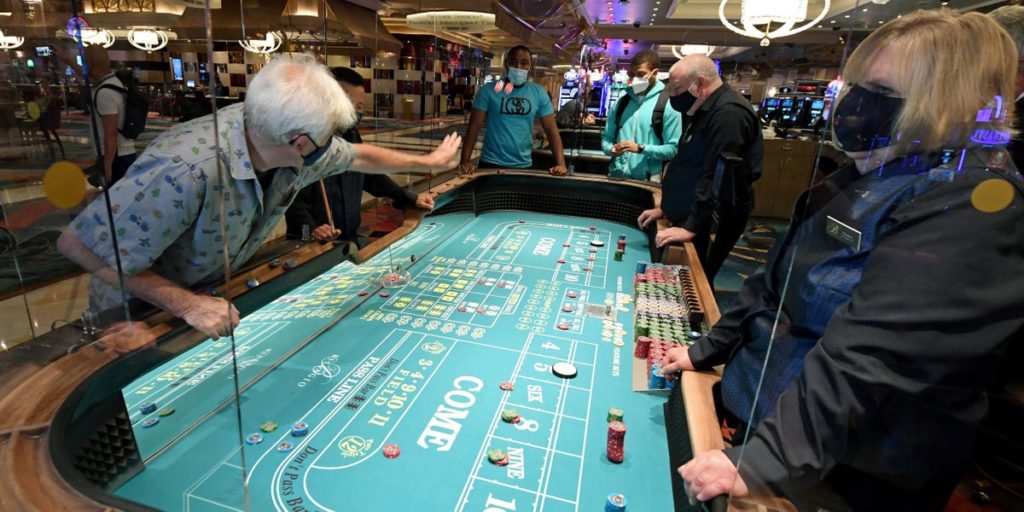
While the mathematics of 5/1 or 11/4 remains unchanged regardless of the venue, the atmosphere in which these figures are used drastically transforms the betting experience. This is where a high-end sportsbook closes the divide between a stale utility and an exciting pursuit. Incaspin Casino does not simply show fractional odds as a query result from a database; it incorporates them into a account of the sporting world. The interface fosters a state of flow, allowing a bettor to toggle seamlessly between analytical match previews that explain the “why” behind a team’s poor form and the matching 3/1 price that needs notice. This context is crucial, especially for those using fractions, because the format itself depends on a mental comparison between the bettor’s own estimated odds and the one presented. Incaspin Casino supports this by offering stats and historical data directly adjacent to the horse racing cards or football markets, effectively turning a static fraction into a dynamic, vibrant piece of data. Moreover, the bookmaker’s commitment to international audiences means that the traditional slash is treated with a respect that modern, sanitized formats often miss. The presentation is polished, quick to load, and, vitally, accurate to the last tick during live events, guaranteeing that the ancient language of odds is communicated clearly in a modern digital dialect that offers speed without sacrificing the soul of the gamble.
Mastering the Anxiety of Odds Intricacy
The final hurdle for the majority of international bettors is never a lack of intelligence, but a mere hesitation arising from an education system that was unable to make math fun. The presence of 13/8 or 9/2 can trigger an needless anxiety response, yet amid these digits lies a freeing structure that can convert a betting session from a random scatter of guesses into a smooth, highly logical system. The optimal method to conquer this fear is to avoid conversion charts in the thick of the moment. Instead, a bettor should speak the odds out loud, absorbing their meaning as a narrative of exchange. Saying “I am risking eight to gain thirteen” or “putting down two to grab nine in return” closes the gap between the abstract fraction and the tangible flutter of adrenaline. At Incaspin Casino, the vast volume of available markets supplies the perfect training ground for this fluency. By consistently applying the straightforward formula of numerator versus denominator across diverse sports, a bettor commences to think in fractions. The subconscious can rapidly rate a 5/2 opportunity as superior to a 9/4 opportunity without a second thought. This fluency opens a critical competitive edge in live betting, where decisions must be executed in the blink of an eye. The elegance of the fractional system is that it was built for quick, shouted transactions in busy, high-stakes environments. Once accepted rather than feared, it becomes the quickest, most emotionally resonant communication method on offer to any bettor aiming to make substantial, well-informed plays.